01 Jan 2026
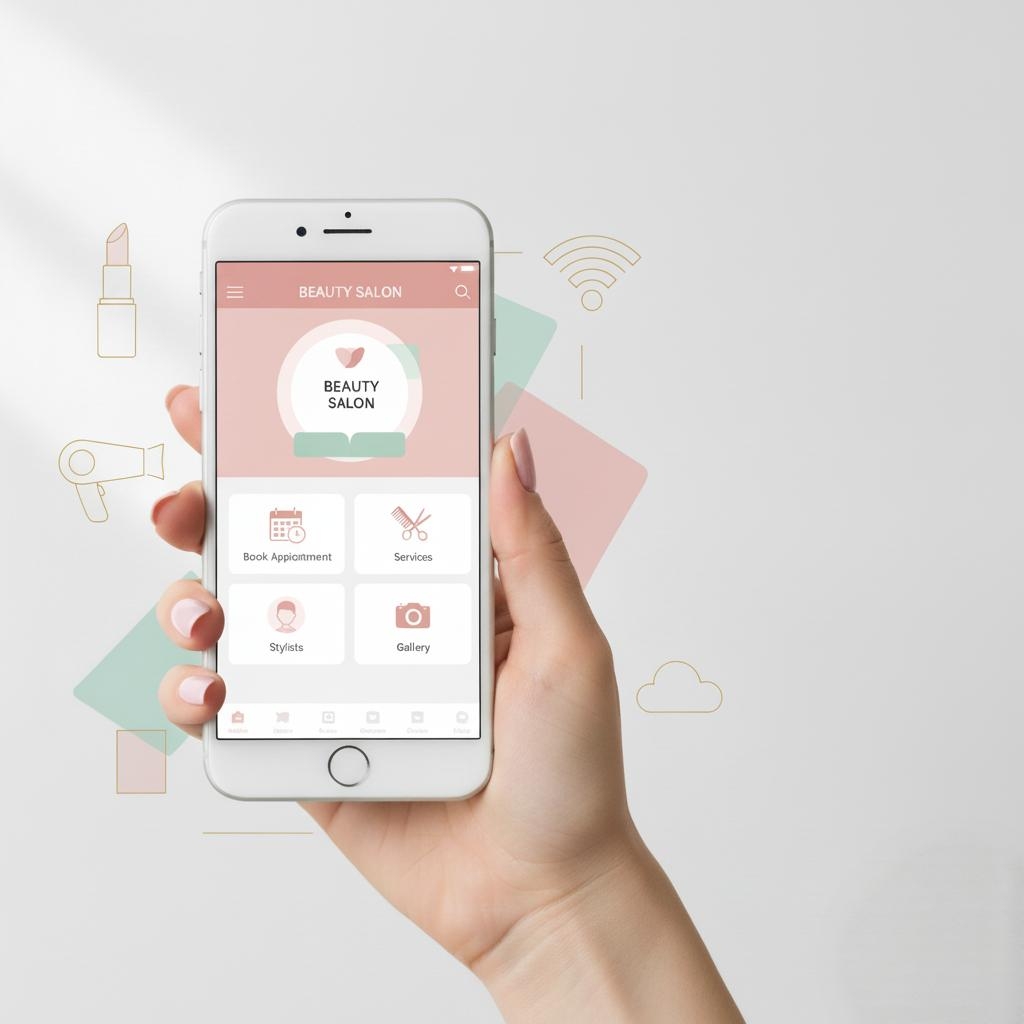
In today’s fast-changing beauty industry, the way customers choose and experience salon services is evolving rapidly. More people are accustomed to finding everything instantly — from booking appointments to browsing services or exploring promotions — right from their mobile phones. For salon owners and beauty parlours that want to meet these expectations, investing in a custom beauty salon app is no longer a luxury. It is fast becoming a necessity. This article explores what beauty salon app development really means, why salons need it now more than ever, and how a salon app can transform everyday salon operations into a seamless, customer-centric, growth-driving experience.
Beauty salon app development refers to the process of designing and building a mobile application tailored specifically for salons, spas, barbers, beauticians, hair stylists, makeup artists and similar service providers. The app connects salons directly with their clients via smartphones. Through this digital platform, clients can browse services, schedule appointments, view prices, make payments, and sometimes even view galleries of previous work. Salon owners and staff get a central dashboard to manage bookings, track inventory, monitor employees, and handle marketing or promotions — all in one place. This is a complete shift from traditional salon management systems based on phone calls, manual bookings or spreadsheets.
A well built salon app typically includes a service catalogue presenting all available offerings with images, descriptions, prices, duration and other details. It will allow customers to create profiles, choose desired services, pick a slot, pay (or reserve), and receive confirmation — often instantly. On the back end, salon owners or administrators can manage customer data, service provision, staff allocation, inventory, promotional offers and analytics. They can also send automated notifications or reminders to clients. This kind of digital transformation not only makes life easier for clients but also dramatically simplifies salon operations.
Running a salon today involves far more than offering haircuts or spa sessions. There's customer appointment scheduling, product inventory, staff coordination, payments, marketing, customer retention efforts and more. A salon app helps unify all these moving parts, bringing multiple currency benefits.
First, an app drastically reduces administrative burden. Instead of juggling multiple phone calls, managing diaries or handling payments manually, everything can be automated: booking confirmations, cancellation management, reminders, rescheduling, and payments. The possibility of double booking or lost bookings drops significantly, while capacity and scheduling become much more efficient. For salon staff, this clarity simplifies shift planning and resource allocation.
Second, a salon app enhances customer experience and satisfaction. Modern customers often prefer convenience — they like being able to book appointments anytime from their phones rather than calling during opening hours. With 24/7 access to booking, a salon app accommodates busy lifestyles and unpredictable schedules. Moreover, features like loyalty programmes, discounts, promotions and in-app payment options make the overall salon experience more attractive and flexible.
Third, having a dedicated app helps salons build stronger brand identity and customer loyalty. Customers appreciate consistency, convenience and ease of access. If a salon lets them browse services, view galleries of hairstyles or treatments, and make secure payments — all in one place — clients are more likely to return. Push notifications or reminders can keep salons on top of clients’ minds, encouraging repeat bookings, seasonal offers or referrals.
Fourth, salon owners gain better oversight and control over their business. With aggregated data on bookings, revenue, popular services, staff performance and inventory usage, they can make data-driven decisions. They can identify peak hours, most requested services, repeat clients, and use analytics to plan promotions or staffing accordingly. This consolidation of information improves efficiency and reduces waste.
Finally, salon apps open up growth and scalability possibilities. Whether a salon owner runs a single outlet or a chain spanning multiple locations, a well built digital platform can support expansion without exponentially increasing manual workload. It makes multi-location management easier, centralises data, and ensures consistent client experience across branches.
Not all salon apps are created equal. The success of a beauty salon app depends heavily on the features and user experience it offers. Several elements stand out as essential for both clients and salon administrators.
One of the most important features is a robust appointment scheduling system. This should allow clients to view available slots, book or reschedule appointments, cancel or confirm bookings, and receive confirmation or reminder notifications. A flexible scheduling system reduces no-shows and improves salon efficiency.
A comprehensive service catalogue is another key element. Clients should be able to browse all services offered with clear descriptions, prices, estimated duration, and optionally images or even videos. This helps them decide beforehand what services they want, improving transparency and satisfaction.
Secure in-app payment integration is vital in a mobile-first world. Clients must be able to pay conveniently using modern payment methods instead of cash. The app should support popular payment gateways, accept tips and possibly manage deposits or prepayments. This reduces friction at checkout and improves financial reliability for the salon.
Feedback tools such as ratings and reviews enrich user trust and help salons maintain quality. Customers often rely on reviews before trying a new salon or service. Including options for customers to rate their experience, leave reviews and even media (images or videos) helps build social proof.
Loyalty programmes, discounts, voucher or coupon features are powerful ways to retain clients and encourage them to return. Regular customers can benefit from special offers, while new clients can be enticed with promotional codes and first-time deals. These tools also help salons build long-term relationships.
Salon apps benefit greatly if they include admin dashboards for salon owners or managers. Through such dashboards salons can manage services, staff schedules, appointments, payments, promotions, customer records, and even track sales and inventory. Owner dashboards make it easier to handle daily operations, monitor trends and adapt strategies accordingly.
Modern salon apps might include advanced features such as in-app messaging or chat, enabling clients to communicate with salon staff or customer support, or even allowing virtual consultations. Virtual consultations can be especially useful for clients who want to discuss treatments or get advice before committing. Some apps even enable video consultations, enabling a hybrid of digital convenience and professional advice.
For salons operating at multiple branches or performing on-demand services (e.g. home spa, home hair styling), multi-location support and GPS-enabled features are beneficial. Clients can see salon branches or professionals nearby, check availability, and even book services at home.
Finally, integrating analytics and reporting tools helps salons understand business performance, customer behaviour, inventory usage and more. This insight supports strategic decisions such as offering discounts on slow days, adjusting prices, or staffing more efficiently.
As technology evolves, salon apps are moving beyond booking and scheduling. The next wave of innovation revolves around personalisation and intelligence driven by AI. Today many developers and salon-app providers are exploring how artificial intelligence can help salons create bespoke experiences for customers.
For example, some advanced salon apps use AI for virtual try-ons, enabling clients to visualise hairstyles, hair colours or make-up results before booking. Others analyse previous client history and preferences to recommend suitable services or products, making the experience feel more tailored and personal. Smart scheduling powered by AI can optimise staff allocation, predict peak times, and reduce waiting or downtime.
AI-driven salon apps may also support predictive inventory management, helping salons maintain optimal product levels and avoid overstocking or shortages. Using data on service frequency, seasonality and product usage, salons can forecast inventory needs and cut costs.
Some developers explore emotion recognition or mood-based suggestions: the app might suggest relaxing spa treatments or revitalising hair makeup based on user mood or preferences. This kind of personalisation can strengthen customer loyalty and make each salon visit feel more like a curated experience.
The shift towards AI salon tools reflects how the beauty industry is merging with tech. Salons that adopt these trends early will likely stand out and offer superior convenience, personalisation and engagement.
Developing a salon app is more than coding a booking module and a payment gateway. It requires careful planning, deep understanding of customer behaviour in beauty services, and a design that reflects the salon’s brand and values.
First, salon owners must begin with a clear vision. What kind of services does the salon offer? Are there multiple branches or just a single outlet? Will the app cater only to walk-in clients or include on-demand services like home visits or mobile stylists? Will there be retail product sales in the app? Will the salon use loyalty programmes, vouchers or discounts? The answers define the app’s scope.
Second, understanding the target audience is crucial. Age group, income level, preferences for treatments versus styling, frequency of salon visits — all influence how the app should be structured. For example, a salon targeting working professionals might emphasise quick bookings, express services and digital payments. A salon targeting bridal or special-occasion clients may require galleries, videos, booking slots far in advance, and prepayment or deposits.
Third, user experience and interface design must be intuitive. The goal is to make booking, browsing, payments, rescheduling or cancellation — if required — as simple as possible. The design should reflect the salon’s brand personality. A cluttered app will discourage users; a clean, responsive, easy-to-navigate UI will encourage repeat usage.
Fourth, security and data privacy must be a priority. The app will handle personal data, payment information, client history and possibly employee details. Ensuring secure authentication (such as biometric login or secure payment gateways), safe storage of data and compliance with local data protection regulations is essential for trustworthiness and professionalism.
Fifth, scalability and flexibility matter. As your salon grows, you may want to add new branches, hire more staff, expand services or include retail product sales. The app architecture should allow for future expansion, quick feature updates, and easy maintenance.
Finally, marketing and customer engagement strategies should complement the app. Launching the app is not enough; salons must encourage existing and new customers to download and use it. Features such as loyalty rewards, introductory discounts, push notifications about offers, and even educational content (for example, beauty tips, how-to videos) can drive engagement and make the app a daily or frequent touchpoint rather than a one-time use.
The digital transformation of the beauty industry is no longer a trend — it is the new normal. As consumer behaviour continues shifting toward convenience, instant access and personalisation, salons without a robust digital presence risk being left behind.
Salon apps bridge the gap between traditional salon services and modern customer expectations. They make it easy for customers to schedule appointments, explore services, make payments, and even discover promotions — all from their pockets. For salon owners, they offer streamlined operations, analytics-based decision making, better customer retention, and business scalability.
With emerging technologies such as artificial intelligence, augmented reality and data-driven personalisation, salon apps are becoming more than just booking tools. They are evolving into comprehensive beauty ecosystems. Customers may one day be able to get hairstyle suggestions based on their face shape, schedule home-service spa sessions, receive product recommendations tailored to their hair history, or get virtual consultations before a major makeover.
In such a future, salons that adopt app-based solutions now will have a competitive edge. They will meet customer expectations today and remain agile to embrace new trends tomorrow.
For salon owners, beauty parlours, barbers, spa managers and others in the beauty and wellness field, beauty salon app development is not just a technical upgrade. It is a strategic transformation. By creating a salon app, you streamline operations, improve customer experience, build loyalty, and position your business for long-term growth.
Whether you are running a single boutique salon or managing a chain of parlours, investing time and thought into an app — one that reflects your brand, values and services — can make your business more accessible, efficient and future-ready. In the evolving beauty landscape, a well designed salon app is quickly becoming the foundation for success and continued growth.